
How AI Language Models Are Changing Everything
Imagine a machine that can write a poem, answer a legal question, debug your code, or explain quantum physics — all within seconds. That machine exists. It’s called a Large Language Model, or LLM.
In this post, we’ll peel back the curtain on LLMs — what they are, how they work, and why they’re reshaping the world as we know it. Whether you’re a tech-savvy student, curious professional, or just someone intrigued by the rise of AI, this post is your guide to one of the most powerful innovations of our time.
🔍 What Is a Large Language Model?
A Large Language Model (LLM) is a type of artificial intelligence designed to understand and generate human-like text. It’s not just a chatbot or autocomplete tool — it’s a machine that has absorbed vast quantities of written language and can generate content based on that understanding.
Think of it as a digital brain trained on books, articles, websites, code, conversations — essentially, the written internet.

📏 Why Is It Called “Large”?
“Large” refers to the number of parameters — think of these as the model’s internal settings or “neurons.” A small language model might have millions of parameters. A large one? Billions or even trillions.
Take GPT-4, for example. It reportedly contains hundreds of billions of parameters, enabling it to recognize patterns in language with astonishing accuracy.
The more parameters, the more nuanced the model’s understanding.

🧠 How Do LLMs Work?
At the heart of LLMs lies a game-changing technology called the Transformer architecture, introduced by Google in 2017.
Here’s a simplified breakdown:
- Tokenization: The input text is broken down into small units (words, subwords, or even characters).
- Self-Attention: The model examines how each word relates to every other word — even those far apart.
- Contextual Learning: It builds a contextual understanding, which allows it to predict the next word or generate relevant responses.
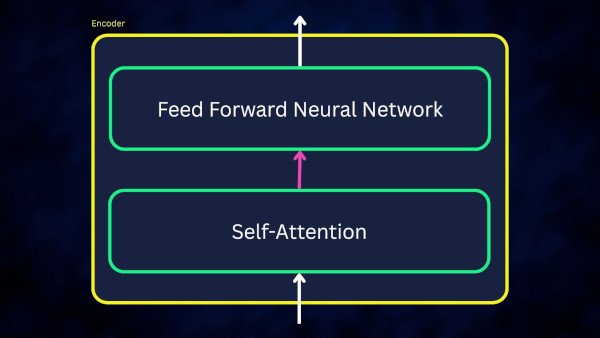
If traditional models saw language as a straight line, Transformers see it as a 3D web of connections.
🎓 How Are LLMs Trained?
Training an LLM involves feeding it massive amounts of text and having it predict missing words in sentences. Over time, it learns:
- Grammar and syntax
- Factual information
- Common sense reasoning
- Stylistic nuances
This is called unsupervised pre-training. Later, models often undergo fine-tuning — including Reinforcement Learning from Human Feedback (RLHF) — to make their outputs safer, more accurate, and more aligned with human values.

🧰 Real-World Uses of LLMs
LLMs are not just theoretical breakthroughs — they’re already being integrated into daily life:
- Education: Tutoring, essay feedback, concept explanations
- Coding: Autocomplete, bug fixes, code generation (e.g., GitHub Copilot)
- Healthcare: Medical research summaries, patient communication
- Writing: Blogs, scripts, poetry, marketing copy
- Business: Emails, meeting notes, customer support, market research

⚠️ Limitations and Ethical Concerns
LLMs are powerful — but far from perfect.
- Hallucinations: They sometimes generate factually incorrect content.
- Bias: They can reflect or amplify biases found in training data.
- Overreliance: Users may take AI responses as truth without verification.
Responsible usage means treating LLMs as augmented tools — not infallible oracles.
🚀 What’s Next for LLMs?
The evolution of LLMs is far from over. Expect to see:
- Smaller models on your device (like Google’s Gemini Nano)
- Multi-modal capabilities — combining text, images, video, and audio
- AI agents that interact with tools, websites, and APIs autonomously
LLMs are becoming more like digital collaborators than mere assistants.

🌟 Final Thoughts
An LLM isn’t magic. It’s math, data, and design — but the result feels magical.
It’s a tool that can amplify human potential, enhance creativity, accelerate learning, and streamline communication.
Understanding LLMs gives you a glimpse into the future of work, education, and interaction — and perhaps most importantly, into how we make sense of our own language and ideas.
🙌 Ready to Explore More?
If you found this post helpful, you’ll love our upcoming content:
- How to Build With LLMs
- The Truth About AI Bias
- 10 Jobs Being Transformed by AI
📣 Let’s Chat
What surprised you most about LLMs? What do you want us to explore next?
🗨️ Leave a comment below — we read every one!
Watch our video: