
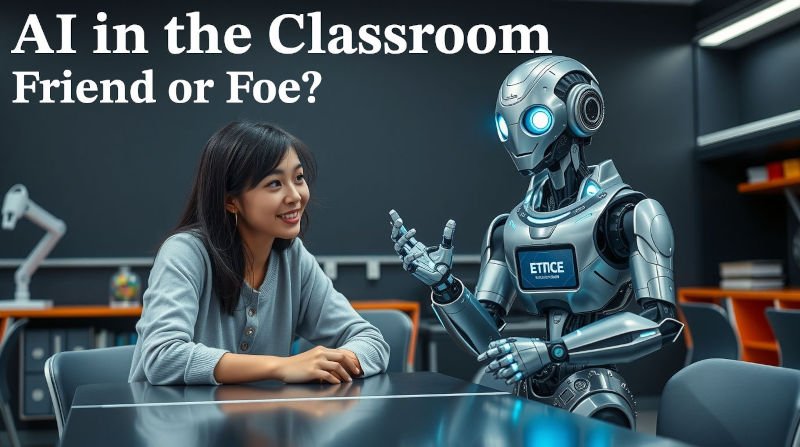
The future of education is unfolding faster than anyone expected. With generative AI stepping into classrooms as tutors, lesson designers, and even digital teaching assistants, students today are learning in a world that looks like science fiction—and feels like a revolution.
But is this revolution a blessing… or a warning?
Is AI becoming the greatest learning tool ever invented—or the biggest threat to genuine understanding?
In this deep-dive, we explore both sides of this evolving story.
🔮 The New Era of AI-Powered Learning
A future once imagined is now happening in real time.
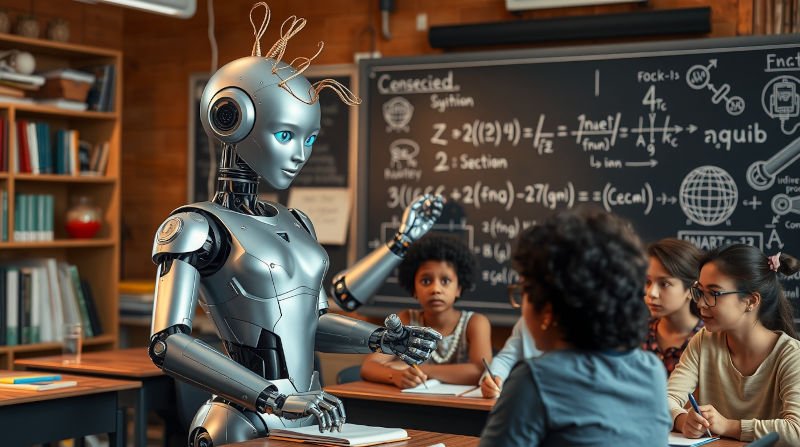
Not too long ago, artificial intelligence in education meant simple quiz software or basic grammar-checking tools. Today, students interact with AI tutors that talk like humans, explain concepts based on their learning style, and create personalized exercises on the spot.
Apps like Khanmigo, ChatGPT, Gemini, and Duolingo Max are reshaping the way students learn, practice, revise, and even discover new subjects.
For the first time in history:
- Every student can access 24/7 tutoring
- Lessons can be tailored to individual strengths and weaknesses
- Explanations can be rewritten in simpler, friendlier, or visual styles
- Students can learn at their own pace
This isn’t just an upgrade.
It’s a transformation.
🎯 Personalized Learning: The Dream That Finally Came True
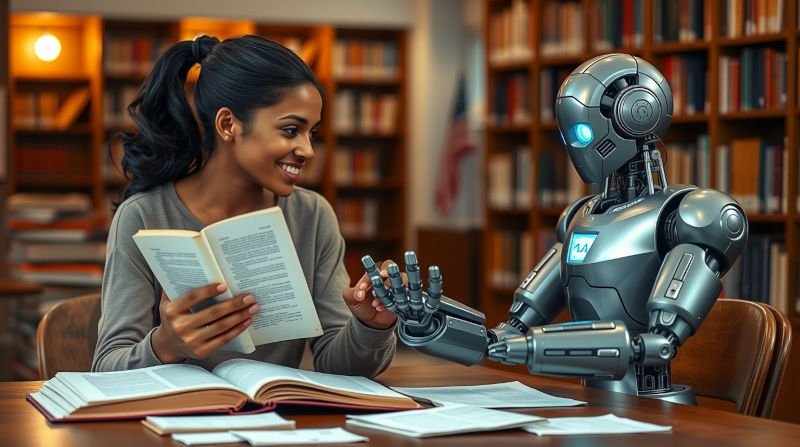
For decades, educators talked about the power of personalized learning—tailoring the educational experience to each student. But in traditional classrooms, one teacher to 30–40 students makes personalization nearly impossible.
AI bridges that gap.
Here’s how:
1. Adaptive Explanations
Struggling with calculus? AI shifts to visual animations.
Prefer stories? AI uses analogies.
Need repetition? AI drills concepts until you’re confident.
2. Custom Practice Sets
Instead of generic textbook questions, AI creates:
- targeted practice
- progressive difficulty levels
- instant feedback loops
3. Learning at Any Time
Students no longer wait for office hours or tuition classes.
Their tutor is always awake.
4. Confidence Building
One of the biggest educational barriers is fear of asking “stupid questions.”
AI removes judgment entirely.
Many students report feeling freer learning from AI:
“I ask my AI tutor things I’m embarrassed to ask my teacher.”
This psychological shift alone can change outcomes for millions.
🌍 Virtual Tutors & Avatars: Education without Borders
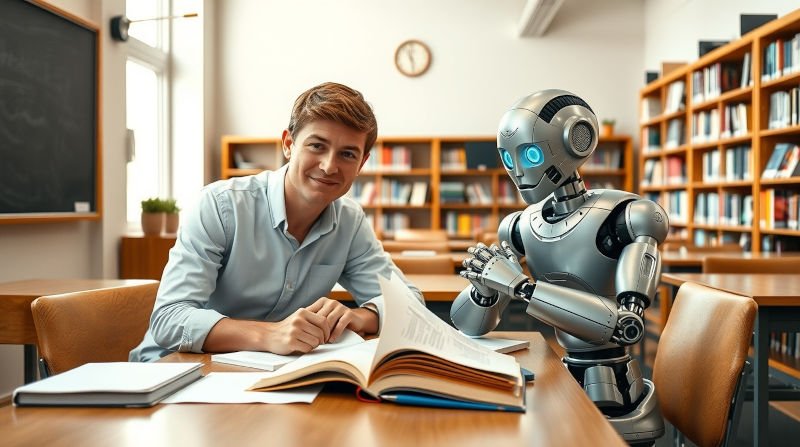
AI avatars aren’t just text-on-screen anymore.
They speak. They emote. They teach with virtual whiteboards, diagrams, and even accents.
Imagine:
- a history lesson delivered by an AI avatar of a Roman historian
- a physics lesson delivered through animated simulations
- language learning with a digital native speaker
- a paraphrased, simplified Shakespeare explaining his own characters
The possibilities are breathtaking.
Breaking Language Barriers
An English learner in a rural village can now learn:
- chemistry in their local language
- coding with voice-guided instructions
- math through visual explanations
Multilingual AI tutors erase educational borders.
Everyone gets access to world-class instruction—no matter where they live.
Equalizing the Playing Field
For students without access to advanced schools, tuition centers, or professional tutors, AI becomes the great equalizer.
This could become one of the biggest educational shifts of the century.
⚠️ The Dark Side: Cheating, Over-Reliance & Shallow Learning

With great opportunity comes great responsibility—and unfortunately, not everyone uses AI to learn.
Some use it to shortcut the process.
The Rise of AI-Assisted Cheating
AI can now produce:
- essays
- homework answers
- full lab reports
- step-by-step math solutions
- presentation slides
- research summaries
All in seconds.
Schools are already reporting:
✔ AI-generated essays
✔ Copy-pasted answers
✔ Homework completed entirely by chatbots
✔ Code from ChatGPT submitted as original work
The problem?
Students seem to perform better… but retain very little.
Over-Reliance and The Death of Struggle
Learning requires friction—struggling through problems, thinking deeply, making mistakes.
If AI does everything instantly, students may skip the friction
→ and also skip the learning.
Critical Thinking at Risk
Tools like spell check didn’t destroy writing.
Calculators didn’t destroy math.
But AI takes automation further—into thinking itself.
If students rely too much on AI, they may:
- lose the ability to problem-solve
- struggle with creative thinking
- become passive learners
- lack foundational understanding
The danger isn’t AI.
It’s using AI instead of thinking.
🧭 The Balancing Act: How Students + AI Can Thrive Together
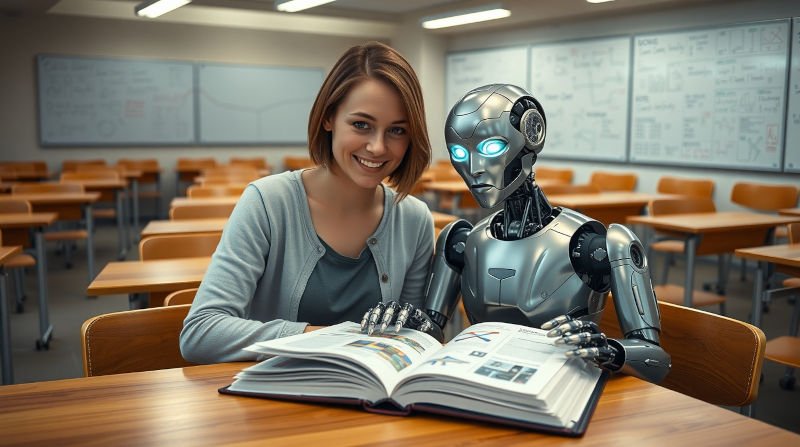
Despite the risks, the future doesn’t have to be scary.
AI can be a powerful ally—if used wisely.
Here’s what a balanced approach looks like:
1. AI as a Learning Partner, Not a Replacement
When used properly, AI becomes:
- a tutor
- a guide
- a coach
- a practice generator
- a feedback engine
It supports learning—without doing the learning for the student.
2. Teachers Using AI for Efficiency
AI can automate tedious tasks like:
- grading
- feedback
- lesson planning
- administrative work
This frees teachers to do what humans do best:
mentor, inspire, connect, and support students emotionally.
3. Schools Defining Ethical AI Use
Progressive schools already have policies like:
- “AI allowed for idea generation, but not final answers”
- “AI tools must be cited”
- “AI can be used for tutoring, but not assignment completion”
Healthy guidelines foster responsible learning rather than shortcuts.
4. Students Developing AI Literacy
The future workplace will expect students to:
- understand AI
- collaborate with AI
- evaluate AI output
- think critically beyond AI assistance
Learning how to “work with AI” is now as important as learning math or writing.
5. AI-Powered Accessibility Boost
AI is transformative for students with special needs:
- speech-to-text
- dyslexia-friendly reading support
- visual explanations
- guided prompts
- personalized pacing
For many, AI offers opportunities they never had before.
🔌 Real-World Examples: AI Already Transforming Classrooms

Khan Academy’s Khanmigo
Acts like a virtual tutor and writing coach.
Duolingo Max
Roleplay-based AI language practice.
Google’s LearnLM
Conversational learning experiences across subjects.
Microsoft CoPilot for Education
Lesson planning, document summarization, and real-time explanation.
Socratic by Google
AI-powered homework support with step-by-step guidance.
These tools prove that AI isn’t “coming someday.”
It’s already here—and accelerating.
🎓 Will AI Replace Teachers?
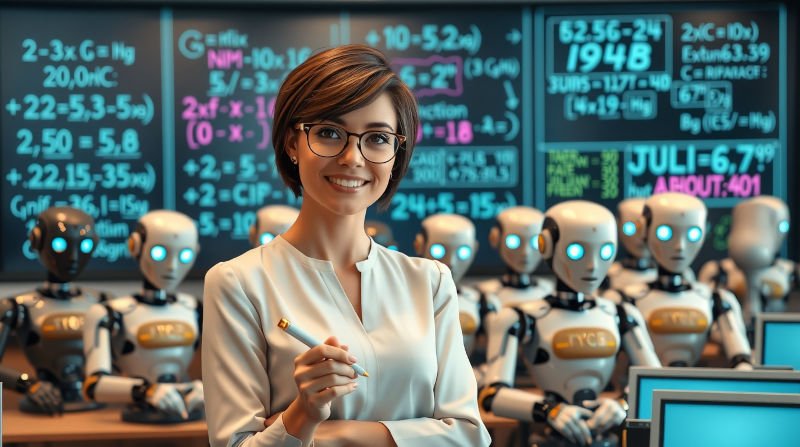
A common fear:
“If AI can teach, do we still need human teachers?”
Absolutely.
AI delivers information.
Teachers deliver connection.
A teacher can:
- inspire curiosity
- build confidence
- teach social skills
- guide emotional development
- spark imagination
- encourage creativity
- provide real-world context
AI cannot replace these human qualities.
Instead, it strengthens teachers by freeing them from repetitive work.
The future classroom is not:
AI vs Teacher
It’s AI + Teacher
—building the best learning experience together.
🧠 The Classroom of the Future: A Glimpse Ahead
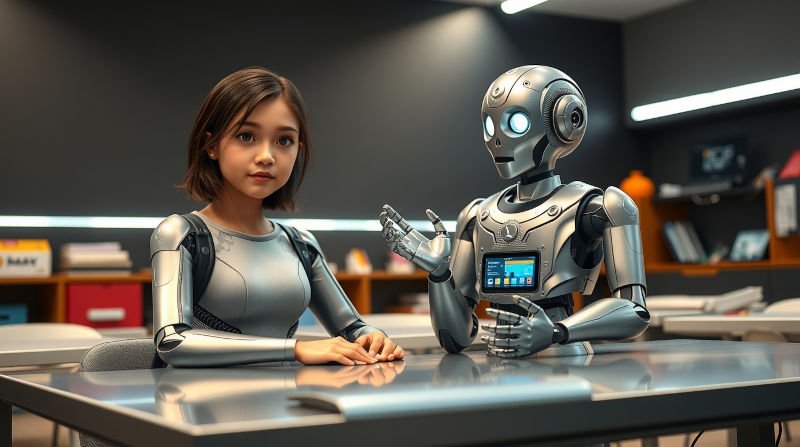
What might learning look like in the next 10 years?
Here’s a glimpse:
- AI tutors integrated into every device
- Real-time learning data showing student progress
- Virtual reality classrooms exploring history, space, and science
- AI coaches for mental well-being
- Instant concept translation across languages
- Adaptive textbooks that rewrite themselves for each student
- Classrooms where no student falls behind because AI monitors mastery continuously
This world is closer than most people think.
🧩 So, Is AI a Friend or Foe?
The answer isn’t simple.
AI is both—depending on how we use it.
Friend
✓ Personalized learning
✓ Accessibility for all
✓ 24/7 support
✓ Efficiency for teachers
✓ Creative learning experiences
Foe
✗ Easy cheating
✗ Over-reliance
✗ Loss of critical thinking
✗ Temptation for shortcuts
The real question isn’t whether AI is good or bad.
It’s whether we choose to use AI responsibly.
Students, teachers, and parents all play a role in shaping how AI influences learning.
Used wisely, AI doesn’t replace human intelligence—
it amplifies it.
📘 Final Thoughts
AI is not here to destroy the classroom.
It’s here to challenge it, transform it, and elevate it into a new era.
The future belongs to learners who master the balance:
thinking independently while collaborating with AI intelligently.
If we get this right, today’s students will grow into the most capable, creative, and empowered generation ever.
Watch our video: