
Introduction: From Sci-Fi to Reality
“AI won’t replace you. A person using AI will.”
Artificial intelligence has long danced on the edges of science fiction—mysterious, powerful, and often misunderstood. But today, it’s very real, deeply woven into our digital lives. At the forefront of this revolution is ChatGPT, an AI-powered assistant developed by OpenAI that is redefining how we write, code, learn, and even think.
In this post, we’ll demystify what ChatGPT is, how it works, and how it’s reshaping industries, education, and everyday life. Whether you’re a student, professional, creator, or simply curious, prepare to be inspired by the future of human-AI collaboration.
What is ChatGPT, Really?
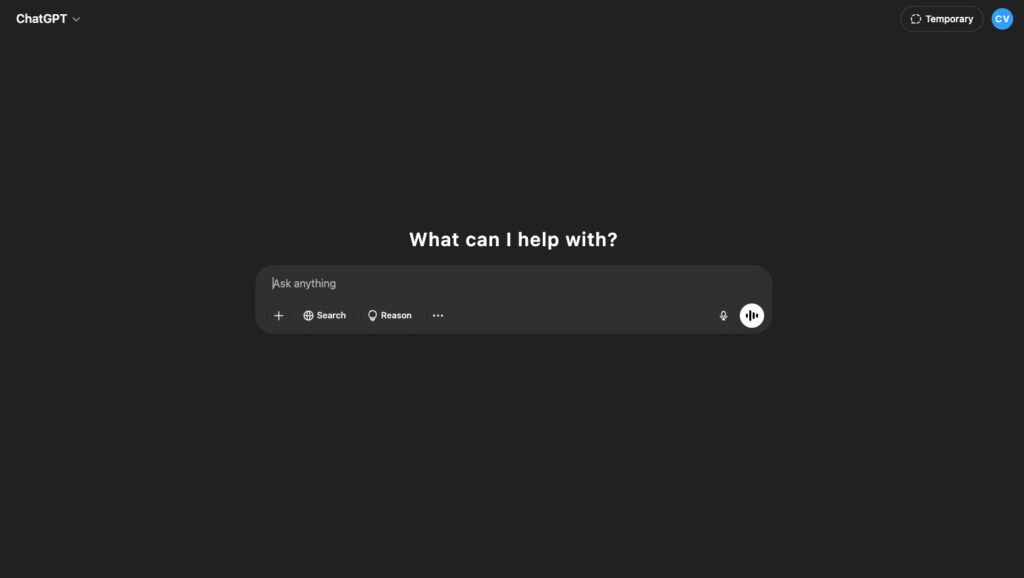
At its core, ChatGPT is a large language model—a type of artificial intelligence trained on vast amounts of text from books, websites, and conversations. It uses deep learning to understand and generate human-like responses to text inputs.
But here’s the twist: it’s not just about chatting. ChatGPT can write essays, debug code, brainstorm ideas, translate languages, tutor in math, design lesson plans, summarize documents, and even simulate characters or personalities. And it’s evolving constantly.
It’s like having a super-intelligent co-pilot that’s always ready to help—24/7.
A Brief History of ChatGPT
To appreciate where ChatGPT is today, let’s rewind briefly:
- 2018: OpenAI released the original GPT (Generative Pre-trained Transformer) model.
- 2019–2020: GPT-2 and GPT-3 stunned the world with their fluency and general intelligence.
- 2022: The launch of ChatGPT, based on GPT-3.5, introduced a new user-friendly interface to interact with the model.
- 2023–2024: With GPT-4 and GPT-4.5, ChatGPT became multimodal—able to see, understand images, and generate code or visuals—ushering in a new wave of AI literacy and productivity.
Why ChatGPT Matters
ChatGPT is not just a novelty or a chatbot—it represents a paradigm shift. Here’s why it matters:
1. It Makes Knowledge Accessible
You can ask ChatGPT any question—from physics formulas to cooking tips—and it responds instantly, often more clearly than a search engine.
“It’s like having a tutor, therapist, co-founder, and researcher in one.”
2. It Unlocks Human Potential
Writers use it to overcome blocks. Coders use it to debug faster. Educators use it to build customized learning modules. Creators use it to brainstorm new ideas. The possibilities are limited only by imagination.
3. It Levels the Playing Field
AI tools like ChatGPT democratize access to information and expertise. You don’t need to be a Silicon Valley expert or academic—anyone with a device and curiosity can benefit.

How ChatGPT Works (In Simple Terms)
Imagine you fed a machine the text of almost every book, website, article, and forum post ever written. Then, you asked it to guess the next word in a sentence—over and over, millions of times. That’s essentially how GPT was trained.
More technically, it uses a transformer neural network architecture and is pre-trained on a diverse dataset. Then, through reinforcement learning with human feedback (RLHF), it’s fine-tuned to follow instructions more safely and helpfully.
It doesn’t “think” like a human, but it can simulate thought through statistical pattern recognition. The result? Incredibly natural conversations and powerful assistance.
What Can You Actually Do With ChatGPT?
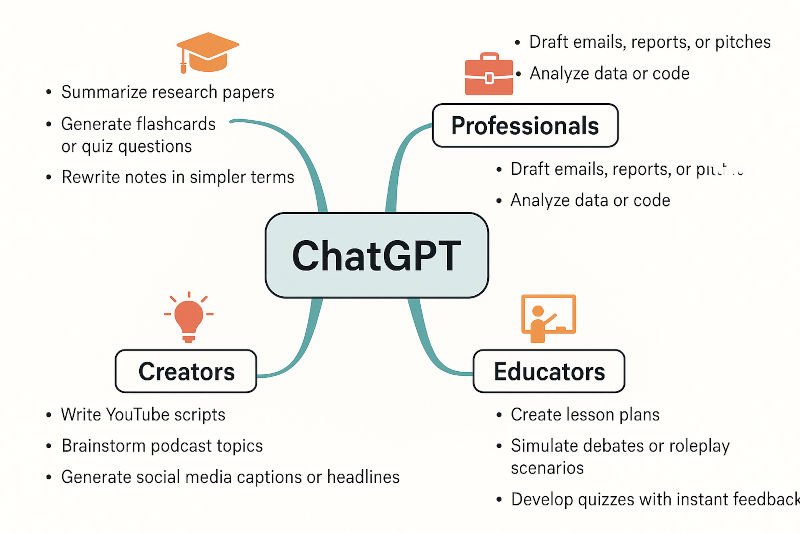
Here are just a few real-world use cases:
✅ Students
- Summarize research papers
- Generate flashcards or quiz questions
- Rewrite notes in simpler terms
✅ Professionals
- Draft emails, reports, or pitches
- Analyze data or code
- Generate ideas for marketing or product development
✅ Creators
- Write YouTube scripts
- Brainstorm podcast topics
- Generate social media captions or headlines
✅ Educators
- Create lesson plans
- Simulate debates or roleplay scenarios
- Develop quizzes with instant feedback
Myths and Misconceptions About ChatGPT
Like any new technology, ChatGPT is surrounded by hype, fear, and misunderstanding. Let’s clear up a few things:
❌ “ChatGPT is sentient.”
Not true. It has no feelings, consciousness, or desires. It mimics understanding but doesn’t experience anything.
❌ “It always tells the truth.”
Not necessarily. ChatGPT can hallucinate or generate plausible-sounding but incorrect answers. Always fact-check.
❌ “It will replace all jobs.”
Also misleading. Like calculators or computers, ChatGPT will change jobs, not necessarily eliminate them. The key is learning to work with AI.
The Ethics and Limits of ChatGPT
With great power comes great responsibility. OpenAI and others have introduced guardrails and policies to reduce harmful or biased outputs. But challenges remain.
⚠️ Key Ethical Considerations:
- Bias in training data
- Misinformation generation
- Privacy of user inputs
- Over-reliance on AI for critical thinking
As users, we have a role to play: use AI responsibly, question outputs, and remain curious.

How to Start Using ChatGPT Today
Getting started is simple:
- Go to chat.openai.com.
- Sign up for a free account.
- Start typing your questions, tasks, or ideas.
For more power, you can subscribe to ChatGPT Plus, which gives access to GPT-4, web browsing, plugins, file uploads, and image generation (with DALL·E).
Tips for Getting the Best Results
Like any tool, ChatGPT is only as effective as how you use it. Here are some quick tips:
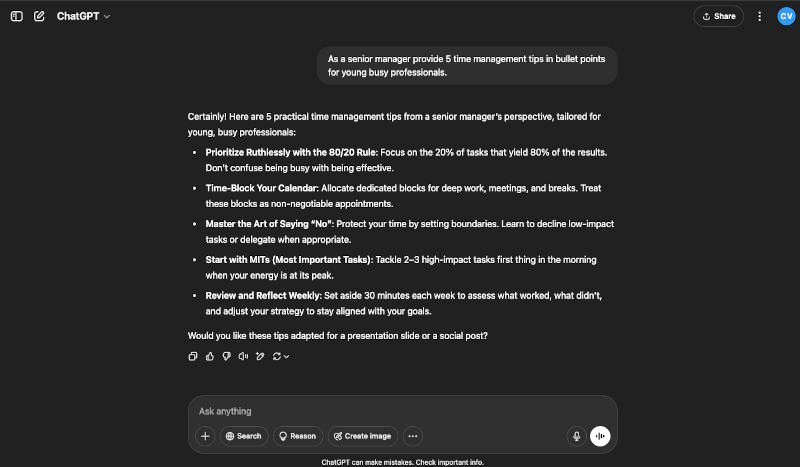
- Be specific in your prompts (e.g., “Explain gravity like I’m 10”)
- Break down tasks into steps
- Ask it to roleplay (e.g., “Pretend you’re a startup advisor”)
- Iterate—try rephrasing or refining your request
Prompt Engineering is quickly becoming a 21st-century superpower.
The Future of ChatGPT (and You)
The path forward is exciting. We’re entering an era of AI companions that are part assistant, part collaborator, and part tutor. Tools like Sora (AI video generation), Code Interpreter, and multimodal inputs are pushing boundaries.
But this future isn’t about AI replacing humans—it’s about amplifying our intelligence, creativity, and humanity.
So the real question isn’t “Will AI change the world?” It already is.
The question is: How will you use it?

Final Thoughts: Your Turn to Explore
ChatGPT is more than a chatbot—it’s a gateway to the next generation of thinking tools. It empowers individuals to learn faster, work smarter, and create like never before. But its magic isn’t in the tech—it’s in how we use it.
So go ahead—ask a question, start a conversation, and see what unfolds.
Because the future of AI isn’t just artificial. It’s profoundly human.
🔗 Further Reading & Resources
- OpenAI Official Website
- ChatGPT Prompt Library (by OpenAI Community)
- How to Use ChatGPT for Productivity
- AI Ethics & Safety Guide
Watch our video on How ChatGPT Really Works.