
🪄 Introduction: The Dawn of AI That Understands Like Us
What if your AI assistant could not only read what you type, but also see what you see, hear what you hear, and even sense the emotions behind your voice?
For decades, artificial intelligence has lived inside words — responding to text, predicting sentences, and crunching data. But today, a new kind of intelligence is emerging — one that doesn’t just process text, but experiences the world through multiple senses.
This is multimodal AI — the revolutionary step that’s bringing machines closer to human-like understanding than ever before.
And in this deep dive, we’ll explore what it is, how it works, and the hidden ways it’s already transforming creativity, learning, healthcare, and our everyday lives.
🌍 What Is Multimodal AI?
In simple terms, multimodal AI refers to artificial intelligence systems that can process and connect information from multiple types of input — like text, images, audio, and video — just like humans do.
Think about it: when you watch a movie, you’re not just seeing frames of color or hearing random sounds. You’re combining what you see, what you hear, and what you feel — and forming meaning from the fusion of senses.
That’s exactly what multimodal AI is trying to achieve.
Traditional AI models — like early versions of ChatGPT — could only handle text. They were brilliant conversationalists but completely blind and deaf.
But with multimodal AI, we’re entering a new world where machines can:
- See an image and understand what’s happening.
- Listen to a sound and connect it to a visual cue.
- Read text while watching a video.
- And even generate content across multiple senses — like turning text into video or speech.
It’s not about replacing humans — it’s about giving AI the same sensory channels that help us navigate reality.
⚙️ How Does Multimodal AI Actually Work?
Let’s break this down simply — no PhD required.
Behind the scenes, multimodal AI relies on a three-step process:
- Encoding:
Each type of input — text, image, or sound — is converted into a special numerical format called an embedding.
Think of embeddings as a universal language for machines — a way for words, pictures, and sounds to live in the same mathematical space. - Fusion:
This is where the real magic happens.
The AI blends all those embeddings together, finding connections and patterns between them.
For example, it learns that the sound of barking + the image of a dog usually means “a dog is barking.” - Decoding:
Finally, it transforms that understanding back into a human-readable form — text, voice, or image output.
So when you ask a multimodal AI, “What’s happening in this photo?”, it doesn’t just see pixels — it interprets context, emotion, and meaning.
That’s how models like OpenAI’s GPT-4o or Google Gemini can “see” and “understand” — they’re not looking at a photo, they’re perceiving it through connected senses.
💡 Real Tools That Bring Multimodal AI to Life
This technology isn’t stuck in research labs anymore — it’s here, and it’s already integrated into tools we use every day.
🧠 1. OpenAI GPT-4o
A model that can process text, images, and voice in real time. You can show it an image, talk to it, and it responds — with understanding, emotion, and speed.
Imagine explaining your broken code to it with a screenshot — and it fixes it for you. That’s not future tech; it’s happening now.
🔍 2. Google Gemini
Gemini takes video comprehension to the next level. Feed it a YouTube video, and it can summarize, explain, or even quiz you on what happened — as if it “watched” the content with you.
For students, it’s like having an AI study buddy that sees and hears the same lesson.
🎬 3. Runway ML and Pika Labs
These are creativity powerhouses. Type “a cat surfing in space,” and they’ll generate a video from scratch.
They combine visual imagination with language prompts, blending sight and storytelling seamlessly.
🎙️ 4. Synthesia and HeyGen
Here, text meets video performance. You write a script, and the AI generates a realistic avatar who speaks it — complete with facial expressions and natural gestures.
These tools are redefining content creation, education, and storytelling — and all powered by multimodal intelligence.
🧩 Hidden Secrets and Unexpected Applications
The true power of multimodal AI lies beyond demos — it’s quietly reshaping entire fields.
🎓 Education
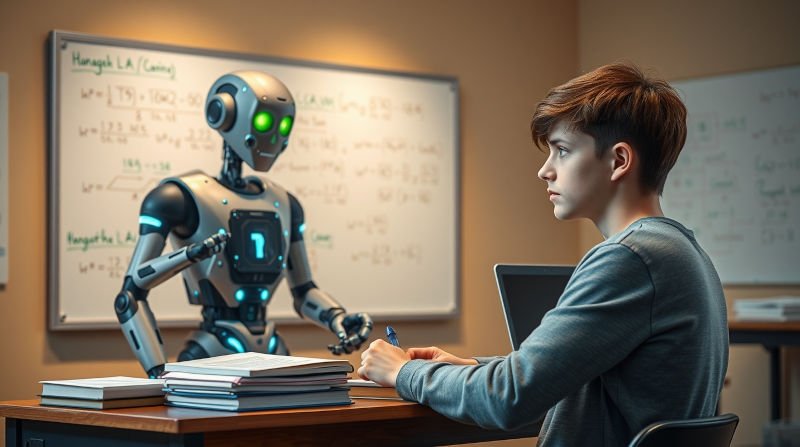
Imagine an AI that watches a student solving a math problem, listens to their explanation, and notices their confusion. Then it rephrases the concept, showing a visual step-by-step guide.
This isn’t distant — AI tutors powered by multimodality are already being tested in learning platforms.
🏥 Healthcare
In hospitals, multimodal AI can analyze medical scans, patient notes, and spoken symptoms simultaneously.
It’s like giving doctors a digital assistant that sees patterns across senses that humans might miss — early disease detection, faster diagnoses, and more personalized care.
🎨 Creative Arts
Artists are collaborating with AI like never before. You can upload a painting and ask the AI to compose a melody that fits its mood.
Or describe an emotion in words, and it creates a short film inspired by it.
The line between art and technology is fading — and what’s emerging is something beautifully human.
♿ Accessibility
Perhaps the most powerful impact: helping people experience the world more fully.
- For those who are blind, AI can describe what’s happening around them — in real time.
- For those who are deaf, it can translate sounds into captions or even sign language.
In this way, multimodal AI becomes more than tech — it becomes a bridge between people and possibility.
⚖️ The Other Side: Ethics, Deepfakes, and Trust

But every powerful tool comes with shadows.
Multimodal AI also makes it easier to create deepfakes — videos that look and sound real but aren’t. It can amplify bias, misinterpret emotions, or analyze private data without consent.
If machines can see, hear, and feel — we have to ask:
What should they be allowed to do with that power?
The challenge isn’t just technical; it’s moral.
AI must evolve with strong boundaries, transparent data, and human oversight — or the same power that empowers us could easily mislead us.
Read More on AI Trust here,
🚀 What’s Next for Multimodal AI?
We’re only scratching the surface.
Soon, multimodal AI will not only understand images, text, and sound — but also gesture, emotion, and intention.
Imagine interacting with your AI assistant through eye contact, tone, and subtle cues — not commands.
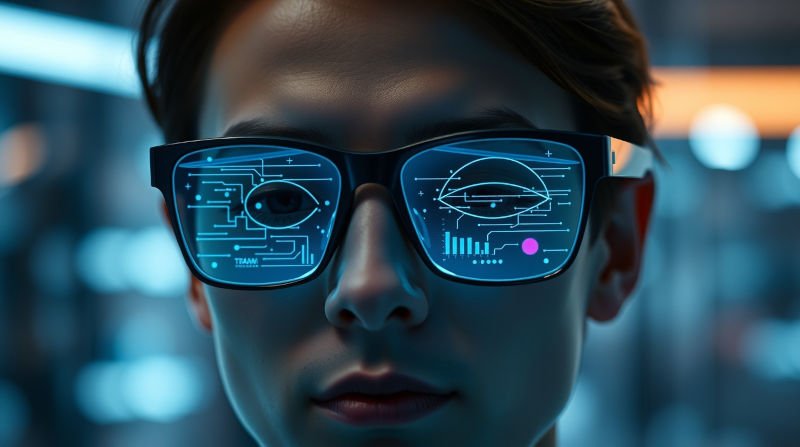
Or wearing AR glasses where AI recognizes your surroundings and quietly assists — reminding you of names, translating signs, or alerting you to potential risks.
It’s not about replacing human senses. It’s about enhancing them.
🌅 Conclusion: A Future Built on Shared Understanding
Multimodal AI is the closest we’ve come to creating a machine that understands the world like we do — not as a list of words, but as a living, breathing experience.
But the hidden secret of this technology isn’t just its ability to see or hear.
It’s how it helps us see differently.
It helps us collaborate with machines not as tools, but as creative partners — expanding what’s possible in art, learning, and human connection.
The question now is not if AI will understand our world — but how we’ll choose to use that understanding.
Will we shape it responsibly, or let it shape us?
The answer will define not just the future of technology… but the future of humanity itself.
Watch our video: