Introduction: When Machines Start to Imagine
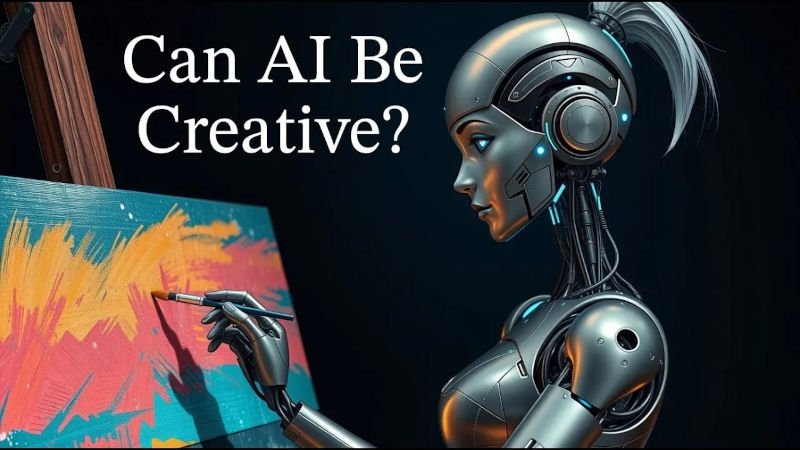
Can a machine write a poem that moves your heart? Can an algorithm compose music that makes you cry—or paint a portrait that feels almost human?
For decades, creativity has been considered the final frontier of human intelligence—the one domain where emotion, intuition, and imagination reign supreme. But now, artificial intelligence is knocking on the studio door, wielding not brushes or instruments, but code.
AI is no longer just calculating or automating—it’s creating. And it’s doing so in ways that challenge our deepest assumptions about what art really is.
1. What Does It Mean to Be Creative?
Before we can judge AI’s creative potential, we have to ask—what is creativity, really?
At its core, creativity is about generating something new and meaningful. It’s not just novelty for novelty’s sake—it’s about connection, expression, and emotion. A jazz improvisation, a photograph that captures a fleeting emotion, or a poem that echoes a personal truth—all carry intent and soul.
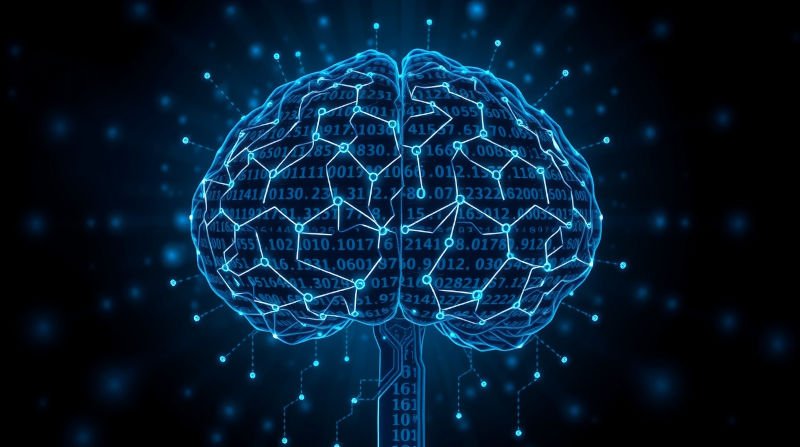
AI, by contrast, doesn’t feel. It doesn’t yearn or dream. But it does learn—from millions of human creations. By analyzing patterns, blending styles, and introducing randomness, AI can generate something unexpected—something that looks and sounds original.
So the question becomes: if the output is fresh and moving, does the process matter?
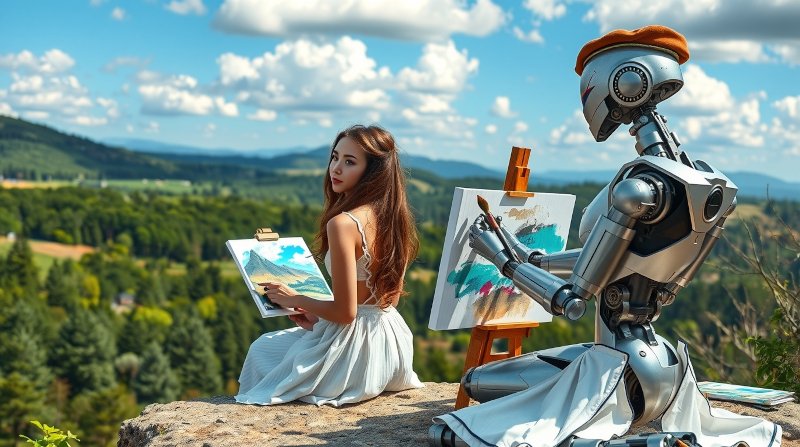
Maybe the creativity isn’t in the AI itself—but in the collaboration between human intention and machine execution.
2. AI in the World of Visual Arts
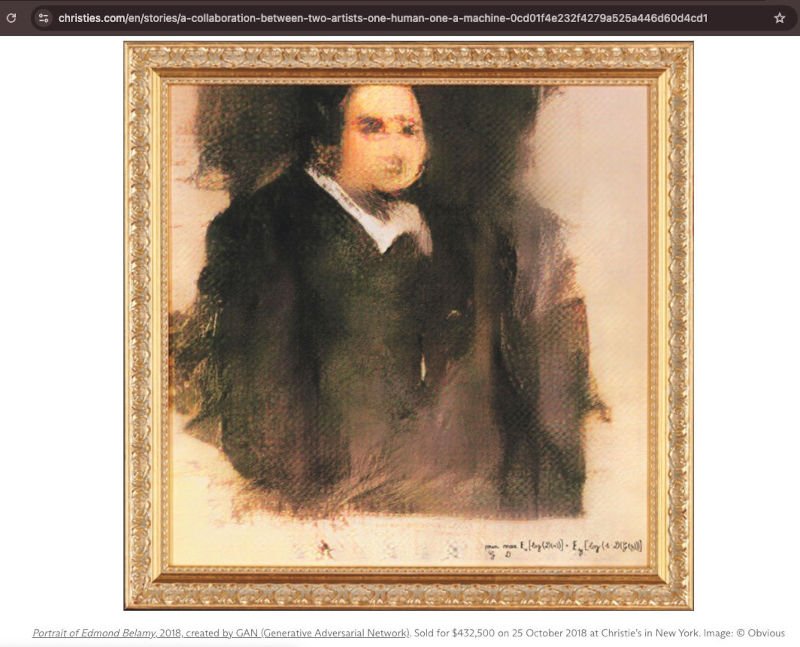
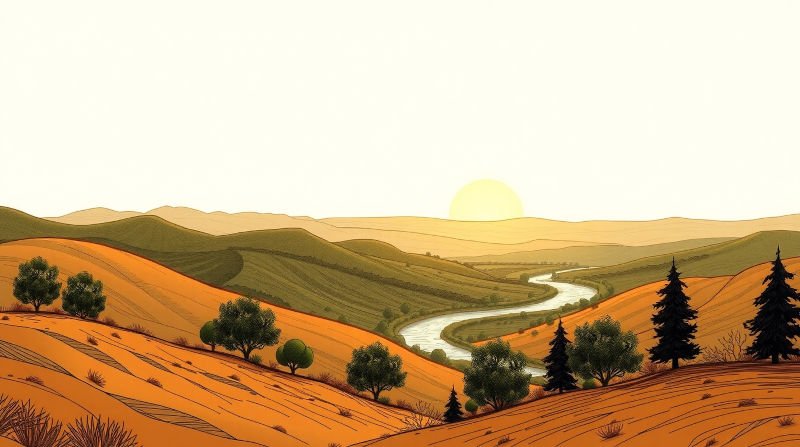
In 2018, an AI-generated portrait titled Edmond de Belamy stunned the art world when it sold for $432,500 at Christie’s. Created by a Paris-based collective using a generative adversarial network (GAN), the artwork looked hauntingly human—yet was painted by no one at all.
Since then, AI art has exploded. Tools like DALL·E, MidJourney, and Stable Diffusion have turned text into breathtaking imagery: glowing cyberpunk cities, Renaissance-style portraits, and surreal dreamscapes that blur the boundary between imagination and code.
For digital artists, these tools have become co-creators. They provide inspiration, help visualize abstract ideas, and even suggest new styles. But they’ve also ignited fierce debates about copyright and authenticity.
If an AI generates an image based on millions of existing artworks, who owns the result? The user? The model’s creators? The artists whose styles were learned by the machine?
Despite the controversy, one truth is clear: AI isn’t stealing creativity—it’s amplifying access to it. It allows anyone with an idea, even without artistic skill, to see that idea come alive.
“AI is not replacing the artist—it’s expanding what art can be.”
3. When Algorithms Compose and Write
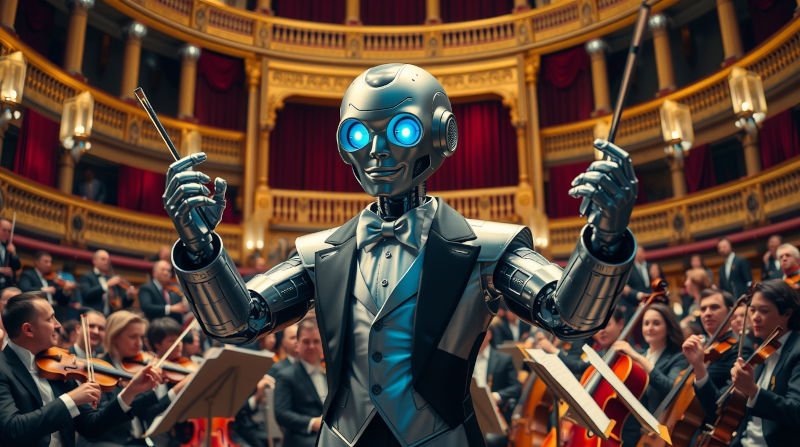
AI’s reach doesn’t stop with visuals. It’s entering the sonic and literary realms too.
🎶 AI and Music
Meet AIVA—the Artificial Intelligence Virtual Artist. It has composed emotional film scores used in short films, advertisements, and games. Then there’s Suno AI and OpenAI’s MuseNet, which can generate entire symphonies in the style of Bach, or blend genres like classical and electronic seamlessly.
AI music tools can now feel human. They can build tension, create harmony, and evoke emotion. But here’s the kicker—they don’t know why their melodies move us. They just replicate the patterns that have moved us before.
✍️ AI and Writing
Language models like ChatGPT, Claude, and Gemini can craft stories, screenplays, and poems that read as though written by a human. Some outputs are shallow; others, eerily profound.
For example, when prompted to “write a poem about loneliness,” an AI can produce verses that resonate with genuine melancholy.
But does the lack of true emotion invalidate the art—or does the emotion it evokes in us make it real enough?
This blurring of authorship makes us rethink the definition of art itself. Perhaps creativity isn’t about who makes it—but what it makes us feel.
4. AI: Creative Partner or Competitor?
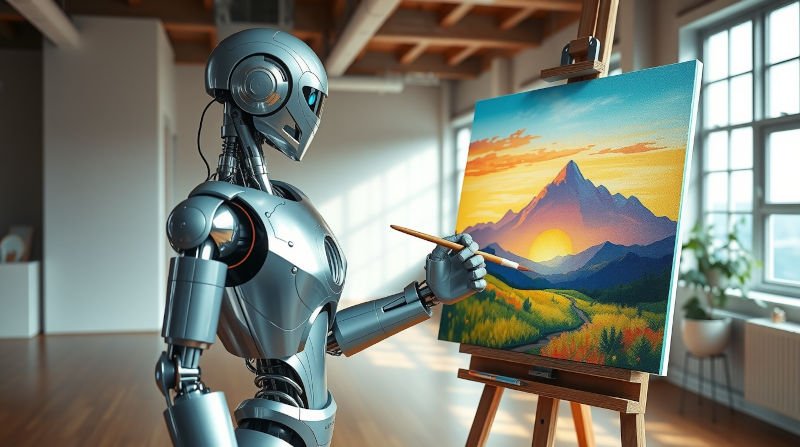
Not everyone is thrilled about AI’s newfound creativity. Many artists fear being replaced—or worse, that originality itself is at risk.
But here’s a more nuanced view: AI doesn’t have to be a competitor—it can be a collaborator.
Think of AI as a brainstorming partner that never tires, never judges, and always offers fresh variations. Designers use it to spark new concepts. Filmmakers use it to pre-visualize storyboards. Writers use it to overcome creative blocks.
Instead of ending creativity, AI is supercharging it.
Still, this partnership brings ethical dilemmas:
- Who owns an AI-assisted work?
- How much credit should go to the human vs. the machine?
- If AI can imitate an artist’s style perfectly, is that admiration—or appropriation?
AI raises questions we’ve never had to answer before, but it also unlocks potential we’ve never imagined.
“The artist of the future might not just hold a brush—they might train a model.”
5. The Future of Artistic Intelligence
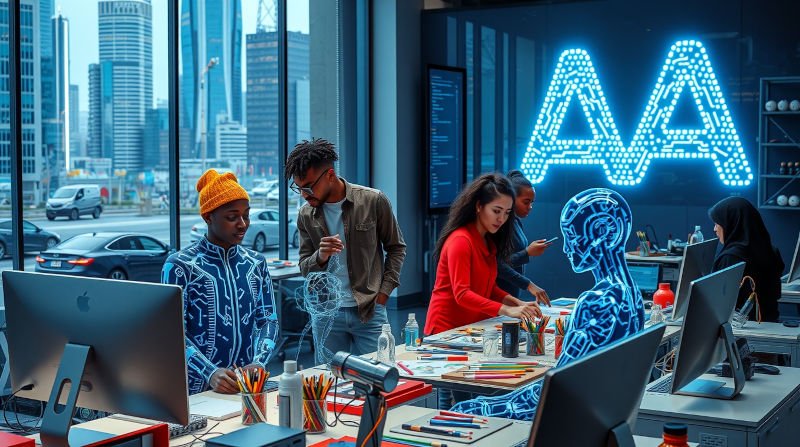
The future of creativity might be AI-assisted imagination—where machines handle the technical heavy lifting and humans steer the emotional direction.
Imagine having a personal AI muse:
- You describe a scene, and it instantly visualizes it.
- You hum a melody, and it builds a full composition around it.
- You jot an idea, and it drafts a script or story outline.
In this future, creativity isn’t limited by skill—it’s limited only by imagination.
This could democratize art on a scale never seen before. The teenager with no instruments, the teacher with no design experience, the storyteller with no budget—all gain access to infinite creative power.
Of course, it comes with responsibility. Artists must learn to guide AI ethically, respecting originality and truth. But when used wisely, AI could help humanity reach new artistic frontiers.
The line between creator and creation will blur—but maybe that’s okay. Maybe that’s evolution.
Conclusion: Redefining What It Means to Create
So, can AI be creative?
Maybe not in the way humans are—it doesn’t feel love, pain, or joy. But it can still reflect them through the data we give it. Its “creativity” may be borrowed from us—but its potential is boundless.
In truth, AI may not be stealing our creativity—it may be helping us see it differently.
As AI grows more capable, the most creative thing we can do is learn how to collaborate with it—how to make art that’s human because of AI, not in spite of it.
After all, the future of art may not belong to humans or machines alone—but to both, working together to imagine worlds neither could create alone.
✨ Key Takeaway
AI is not replacing creativity—it’s redefining it.
It’s not an end to art—it’s an evolution of it.
The question isn’t “Can AI be creative?”
It’s “What new kinds of creativity can AI and humans create together?”