
Every click. Every scroll. Every “I agree.”It’s all data. And it’s all training AI to understand you better than you understand yourself.
Artificial Intelligence (AI) is changing everything—how we shop, learn, work, and connect. But beneath the convenience is a complex and often invisible exchange: your personal data for personalized experiences.
In this post, we’re unpacking exactly how AI uses your data, what happens behind the scenes, and what you can do to take back control. Whether you’re a curious tech enthusiast, a student navigating digital privacy, or a professional working in tech—this is essential reading.
🧠 What Is AI Doing with Your Data?
AI doesn’t “think” in the human sense. It learns. And the way it learns is through data.
When you:
- Search for something on Google
- Pause on a TikTok video
- Like a post on Instagram
- Use GPS for directions
… you’re not just using a service. You’re also providing training material for AI systems.
How It Works:
AI algorithms collect millions of datapoints and look for patterns. Over time, these patterns help systems predict what you’ll do next:
- What you might want to watch
- What product you’re likely to buy
- Whether your behavior fits a fraud profile
Example:
You open Spotify. It recommends a playlist. You skip the first song, listen to the second, replay the third. Spotify notes that. And next time? You’ll see more songs like the third one.
Your behavior = your data = the AI’s next prediction.
🌎 Real-Life Examples: Where Your Data Goes
AI-powered apps and platforms are everywhere. Here’s how some of the most familiar ones use your data:
1. Google Maps
Tracks your location history to provide traffic updates and suggest optimized routes.
2. Amazon
Uses past purchases, clicks, reviews, and even browsing time to recommend products.
3. YouTube & TikTok
These platforms track what videos you watch, how long you watch them, whether you like or comment—even your scrolling speed.
4. Healthcare AI
Analyzes patient records to predict conditions like heart disease or recommend treatments.
5. Financial AI
Detects suspicious transactions using your typical spending behavior.
🔎 The Data You Didn’t Know You Shared
We often think of “data” as things we type into a form. But AI collects passive data too—information you’re not even aware you’re giving away.
Passive Data Includes:
- Typing rhythm and speed
- GPS and location tracking
- Facial expressions and voice tone
- Battery level, device temperature
- Background app usage
Even if your name isn’t attached, AI can use a method called data triangulation to piece together your identity from scattered signals.
Shocking Fact: In some cases, researchers have been able to re-identify “anonymized” users with 95% accuracy using just four pieces of seemingly harmless data.
⚖️ What Happens to Your Data?
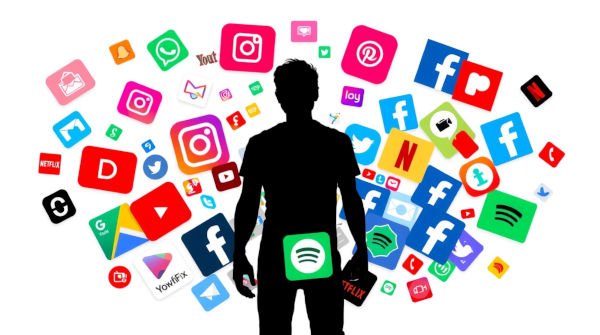
Once collected, your data doesn’t just sit on your phone. It often moves to:
- Cloud servers like AWS, Google Cloud, or Microsoft Azure
- Ad networks that track users across apps and websites
- Data brokers who buy and sell anonymized user profiles
- AI training sets used to develop new models
Key Insight:
Some AI systems have been trained on public content scraped from blogs, social media posts, forums, and even medical journals.
Yes, your old Reddit post could be training a chatbot.

📊 Privacy vs. Performance: The Trade-Off
Let’s be honest. We like when Netflix nails a recommendation. Or when Google auto-fills our query perfectly.
But every “smart” moment is powered by data extracted from you.
Trade-Off:
| More Personalization | Less Privacy |
| Better product recommendations | Detailed tracking of behavior |
| AI that knows your taste | Constant surveillance |
| Smart assistants | Data stored indefinitely |
The scary part? Most people don’t even realize they opted in.
📄 Who’s Regulating AI and Data Use?
Some regions are stepping up:
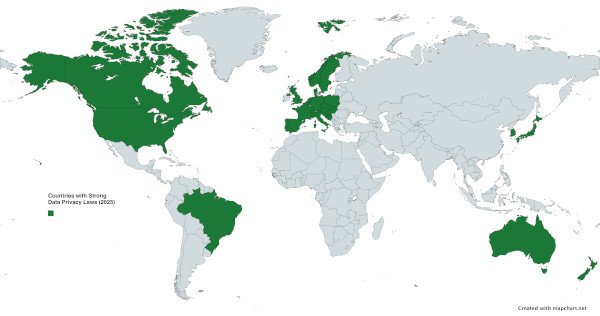
- EU GDPR: Requires clear consent, data access, and the right to be forgotten.
- California CCPA: Offers limited consumer protections and transparency.
But in most countries? Data protection laws are vague, outdated, or nonexistent.
Meanwhile, companies continue to push boundaries with ambiguous terms of service.
✅ What Can You Do to Protect Your Data?
You can’t unplug completely. But you can take back control. Start with these steps:
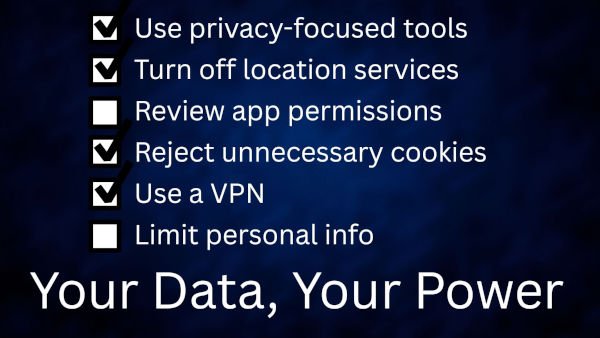
- Use privacy-focused tools: DuckDuckGo, Brave, ProtonMail
- Turn off location services unless necessary
- Review app permissions regularly
- Reject unnecessary cookies on websites
- Use a VPN for secure browsing
- Limit personal info shared online (even in “private” groups)
Remember, every data point you share is a choice.
✨ Final Thoughts
In the age of AI, your data is a digital version of you.
It can be used to personalize, assist, protect—but also to manipulate, predict, or profit from your behavior.
Understanding how AI uses your data isn’t just for cybersecurity experts or lawyers. It’s for everyone living in the 21st century.
Knowledge is power. And the more you know, the better you can protect your digital self.
📅 Coming Up Next…
Curious about how bias affects AI predictions? Or how AI can be creative? Stick around. Our next blog dives into “Vibe Coding with ChatGPT”
Watch our video: