
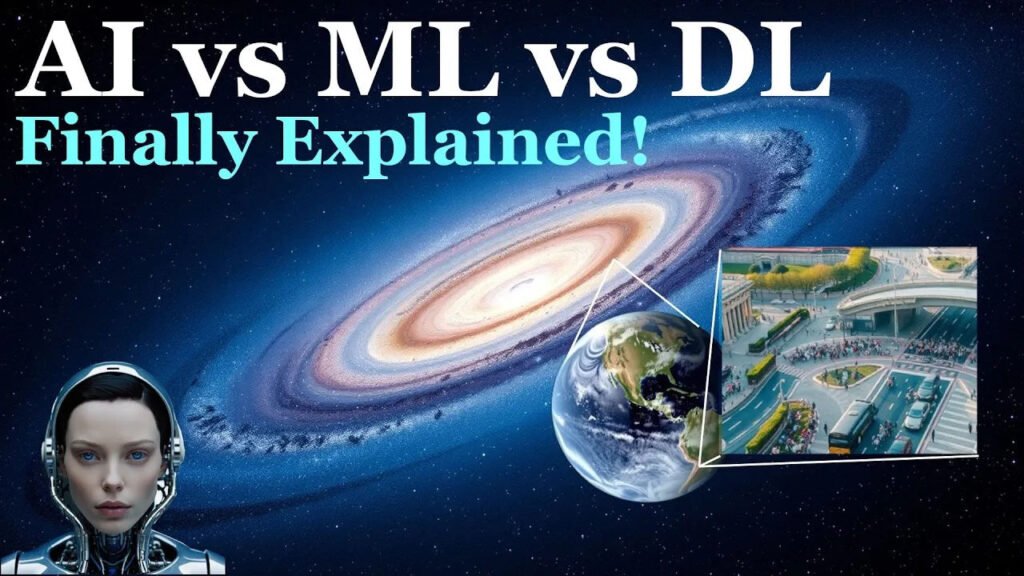
Ever wonder if Artificial Intelligence, Machine Learning, and Deep Learning are just tech buzzwords for the same thing? Or do they actually mean something different?
If you’ve felt confused by the jargon—you’re not alone. These terms often get tossed around like interchangeable ingredients in a futuristic soup. But the truth is, while they’re related, they’re not the same.
In this post, we’ll cut through the confusion using simple explanations, real-world analogies, and visuals (with image suggestions) that will help you finally understand the relationship between AI, ML, and DL.
🔍 Table of Contents
- What is Artificial Intelligence (AI)?
- What is Machine Learning (ML)?
- What is Deep Learning (DL)?
- AI vs ML vs DL – How They’re Related
- Real-World Applications
- Why This Matters in 2025 (and Beyond)
- Final Thoughts
🤖 What is Artificial Intelligence?
Artificial Intelligence (AI) is the broadest concept. It’s the overarching idea of creating machines or systems that can mimic human intelligence.
Think of AI as the goal: the ambition to make machines think, reason, perceive, and make decisions like humans do.
From voice assistants like Siri and Alexa to recommendation engines on Netflix, AI is already embedded in your daily life.
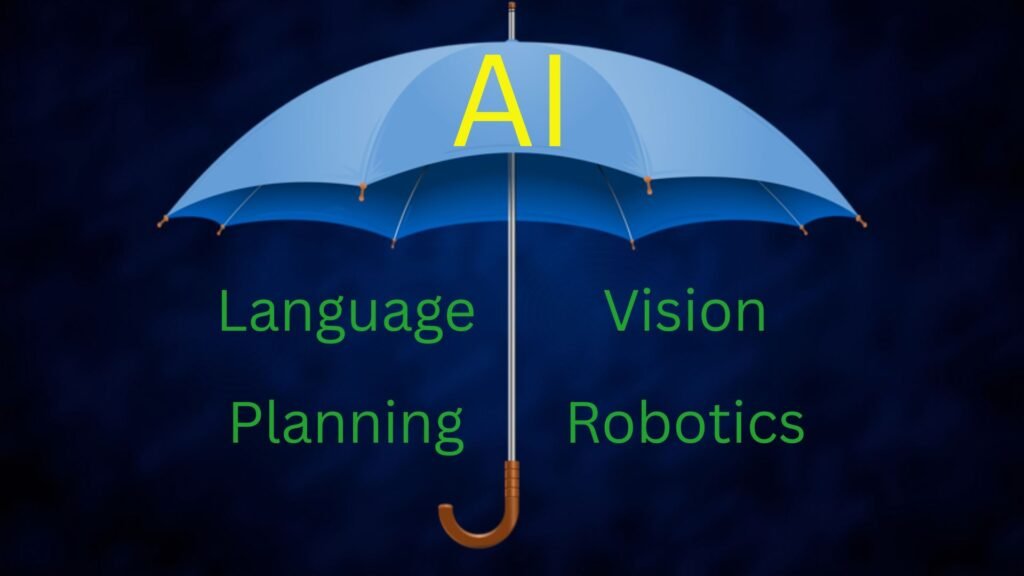
Real-World Examples of AI:
- Speech Recognition: Apple Siri, Google Assistant
- Image Recognition: Facial unlocking on phones
- Decision Making: Spam filters, recommendation systems
- Autonomous Systems: Self-driving cars
AI is not a single technology—it’s a collection of methods to simulate intelligence.
📊 What is Machine Learning?
Machine Learning (ML) is a subset of AI. It refers to systems that learn from data instead of being explicitly programmed.
In traditional programming, a developer writes rules. In machine learning, you feed the model data, and it learns the rules itself.
🧠 Example:
Feed thousands of labeled images of cats and dogs into a machine learning algorithm. Over time, it learns to classify new images correctly—even ones it hasn’t seen before.
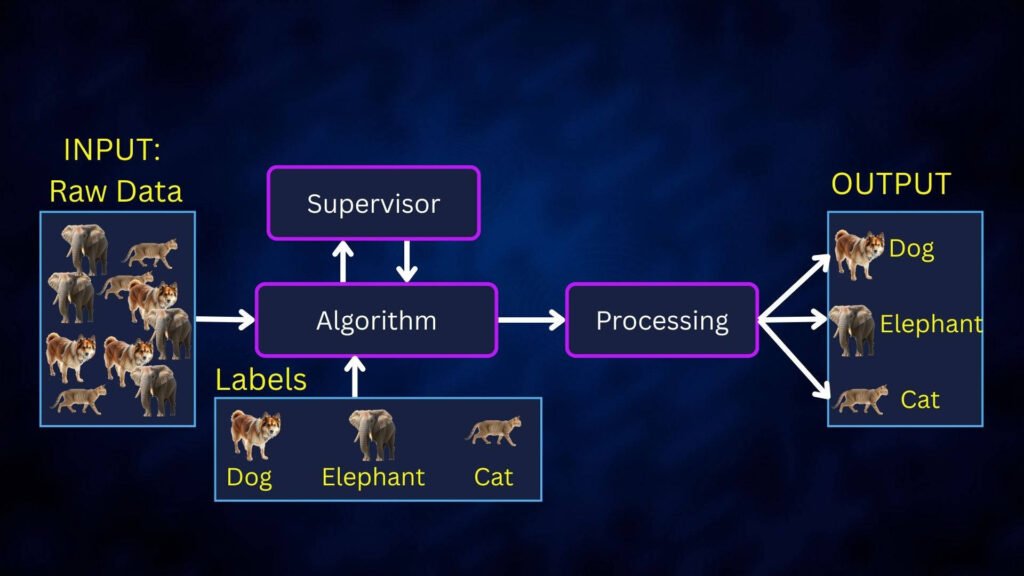
Key Types of Machine Learning:
- Supervised Learning – The model learns from labeled data(e.g., predicting house prices from square footage)
- Unsupervised Learning – The model finds patterns in unlabeled data(e.g., customer segmentation)
- Reinforcement Learning – The model learns through trial and error(e.g., AI playing video games)
🧬 What is Deep Learning?
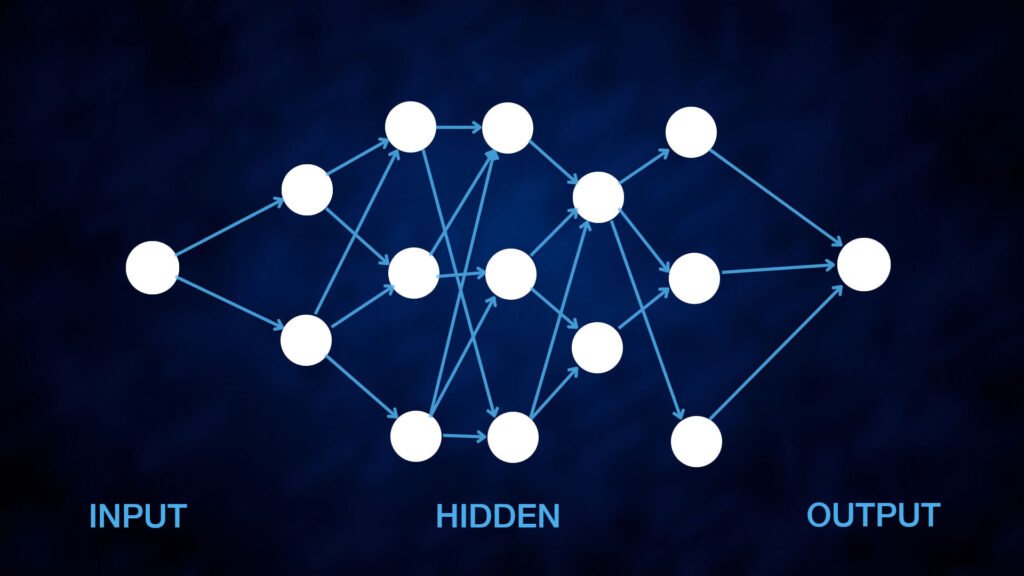
Deep Learning (DL) is a more advanced type of Machine Learning that uses artificial neural networks—complex algorithms modeled after the human brain.
These networks have multiple layers (“deep” refers to depth, not philosophical insight) that help models understand more abstract features.
Example:
While traditional ML might struggle with recognizing handwritten digits, Deep Learning can analyze handwriting, emotion in voices, and even generate realistic human faces.
Real-World Uses of Deep Learning:
- Image Generation: DALL·E, Midjourney, Leonardo AI
- Language Models: ChatGPT, Google Gemini, Grok, Claude
- Autonomous Vehicles: Tesla’s computer vision
- Healthcare: Early cancer detection from scans
🔄 AI vs ML vs DL – How They’re Related
Now that we’ve unpacked each one, let’s connect the dots.
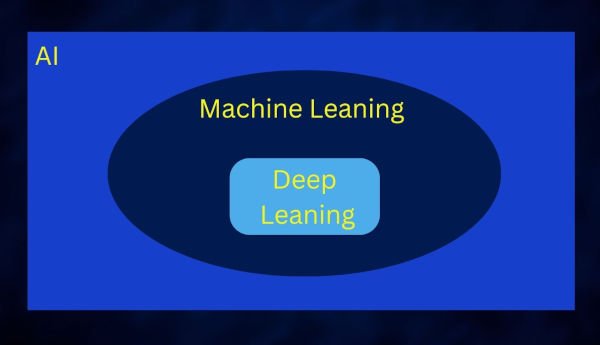
AI is the broad category. ML is a method within AI. DL is a technique within ML.
🔁 Visual Analogy:
- AI is the universe 🌌
- ML is a planet 🌍
- Deep Learning is a city 🏙️ on that planet

Quick Comparison Table
| Feature | AI | Machine Learning | Deep Learning |
| Scope | Broad goal of intelligence | Learning from data | Neural networks with layers |
| Data Requirement | Varies | Requires labeled data | Requires large datasets |
| Computing Power | Moderate | High (for some models) | Very High |
| Examples | Siri, Netflix, Google Maps | Spam detection, fraud alerts | ChatGPT, DALL·E, Tesla |
🌍 Real-World Applications You Use Daily
Understanding these differences isn’t just theoretical. These technologies power the apps, systems, and experiences we rely on every day:
| Technology | Example | Category |
| ChatGPT | Conversational AI | Deep Learning |
| Spotify | Music recommendations | Machine Learning |
| Tesla Autopilot | Computer vision for driving | Deep Learning |
| Gmail | Spam detection | Machine Learning |
| Netflix | Personalized content suggestions | Machine Learning |
| Google Photos | Facial recognition and tagging | Deep Learning |
🚀 Why This Matters in 2025 (and Beyond)
In 2025, AI isn’t a futuristic fantasy—it’s a present-day superpower.
Understanding the difference between AI, ML, and Deep Learning gives you:
- 💼 Career Edge: Know where to focus your learning or investments
- 🧠 Smarter Decisions: Evaluate tools, startups, or systems intelligently
- 🚀 Innovation Fuel: Imagine new solutions using the right tech stack
Whether you’re building an app, launching a business, or just staying informed—this knowledge separates hype from reality.
✍️ Final Thoughts
Artificial Intelligence is not magic—it’s math, data, and a whole lot of innovation.
By now, you should clearly see:
- AI is the goal of replicating intelligence.
- ML is the method of learning from data.
- Deep Learning is the tool for tackling the hardest problems with neural networks.
And the best part? These fields are still evolving. The next wave of breakthroughs will come from people—maybe you—who understand the differences and possibilities of each.
🙌 If this post sparked an “aha!” moment…
👉 Share it, save it, and stay curious.
Don’t forget to check out our YouTube explainer for a visual walkthrough of everything we covered here.
Watch the full video here