
“Imagine asking a chatbot to plan your trip, generate visuals, write code, and even create a video — all inside one conversation.”
That’s not a future dream anymore. That’s OpenAI DevDay 2025.
Held on October 7, 2025, in San Francisco, OpenAI’s DevDay brought together developers, creators, and tech leaders to unveil a new chapter in AI — one that blurs the boundaries between chat, apps, and automation.
ChatGPT — now boasting over 800 million weekly active users — is officially transforming from a smart assistant into a full-fledged AI operating system.
And this shift could redefine how we learn, work, and build for the next decade.
In this post, we’ll unpack the 7 biggest announcements from DevDay 2025 — and what they mean for everyday users, creators, and developers.
🧠 The Big Shift: From “Chatbot” to “AI Platform”
ChatGPT isn’t just a chatbot anymore — it’s a platform.
Until now, ChatGPT has been the front-end interface of OpenAI’s intelligence. You’d open it, type something, and get a great answer. But starting now, ChatGPT becomes a hub for interactive apps and autonomous agents that live inside the chat experience.
Think of it like this:
iOS made smartphones app-ready.
ChatGPT is making conversations AI-app ready.
That’s the philosophical shift DevDay 2025 represents — and it’s a big one.

1️⃣ Apps SDK — Build Apps Inside ChatGPT
The announcement that stole the show: OpenAI’s Apps SDK — a toolkit that lets developers build interactive apps directly inside ChatGPT.
These aren’t simple plugins. They’re fully functional mini web apps built using familiar technologies like React, complete with maps, forms, buttons, and dynamic UIs — all embedded within chat.
Launch partners already include Spotify, Booking.com, and Canva, enabling experiences like:
- Creating a study playlist directly from a ChatGPT conversation
- Booking your next trip while chatting about destinations
- Designing graphics collaboratively — in real-time — without ever leaving ChatGPT
For users, this means no more switching apps.
For developers, it’s access to 800+ million potential users instantly — no app stores, no ads.
And yes, OpenAI confirmed that monetization protocols are coming soon, opening an entirely new economy inside ChatGPT.
In short: ChatGPT is becoming your app ecosystem — not just your assistant.
2️⃣ AgentKit — The Toolkit for Real-World AI Agents
If Apps SDK is the “what”, AgentKit is the “how.”
AgentKit is OpenAI’s new toolkit for building production-grade AI agents — systems that can reason, connect to external data, and act on your behalf.
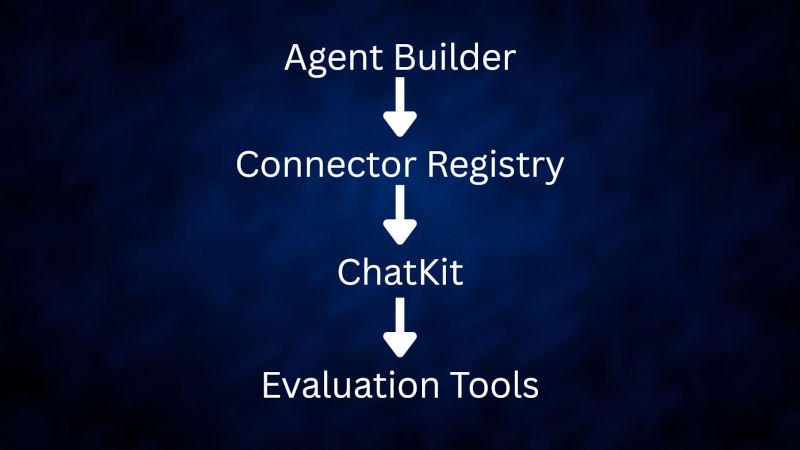
It’s structured around four key pillars:
- Agent Builder – A drag-and-drop interface for creating workflows without code.
- Connector Registry – Secure integrations with services like Google Drive, Notion, and internal databases.
- ChatKit – Customizable chat UIs so your agents look and feel the way you want.
- Evaluation Tools – Built-in analytics, testing, and performance tuning.
With AgentKit, even small teams can build sophisticated AI-powered workflows — from support bots to financial assistants — in under an hour.
Companies like Ramp already report a 70% reduction in dev time using AgentKit for production systems.
For students or professionals, this means access to reliable AI agents that can:
- Analyze spreadsheets
- Summarize research documents
- Handle complex workflows without needing to “re-prompt” every time
For developers, it’s the fastest route to production-ready AI.
3️⃣ GPT-5 Codex — The Next-Gen Coding Agent
The coding revolution continues.
GPT-5 Codex, OpenAI’s new AI coding agent, is officially out of preview — and it’s seriously powerful.
This model integrates seamlessly with:
- Slack – Tag tasks or ask for explanations directly in chat
- GitHub Actions – Auto-review code, write pull requests, and execute builds
- IDEs & Terminals – Run, debug, and refactor code in real-time
Early results are stunning: teams report 70% faster PR merges, and 50% faster code reviews at companies like Cisco.
For students or self-learners, this means:
AI is no longer just your tutor — it’s your coding partner.
For developers, it’s an automation powerhouse. Codex can write, test, and optimize — freeing you to focus on architecture and creativity.

4️⃣ GPT-5 Pro — The Precision Model for Critical Thinking
OpenAI also revealed its most powerful model yet: GPT-5 Pro.
It’s designed for deep reasoning tasks — from financial analysis and legal drafting to complex simulations and scientific reviews.
GPT-5 Pro introduces:
- Visible thought processes – You can view how the model reasons step-by-step
- Self-correction – It revises answers in real-time when detecting inconsistencies
- Hybrid support – Combine GPT-5 Pro with faster models for efficiency
It’s slower and pricier than GPT-5, but it’s significantly more trustworthy for domains where precision is non-negotiable.
For professionals, this means a serious productivity edge in data-heavy or regulated industries.
For students, it means more reliable reasoning in research or technical projects.
5️⃣ Sora 2 — The Text-to-Video Revolution
OpenAI’s video generation model, Sora, just got its biggest upgrade yet.
Introducing Sora 2, available in two variants:
- sora-2 (standard) – Fast and affordable, great for prototyping
- sora-2-pro (premium) – High-quality, production-grade outputs
The Sora 2 API lets developers (and creators) generate or remix videos directly from text prompts — supporting clips up to 10 seconds long, with webhook support for real-time processing.
Safety filters ensure ethical content generation, but the creative potential is massive.
Imagine typing:
“Generate a 10-second video showing a futuristic AI city at sunset.”
…and watching it come alive within seconds.
For creators, this could be the YouTube B-roll generator of the future.
For developers, it’s a gateway to AI-powered video platforms or educational animation tools.

6️⃣ gpt-realtime-mini — The Voice Model that Feels Human
Voice interaction just took a huge leap forward.
gpt-realtime-mini is a compact, low-latency speech-to-speech model that supports:
- Emotional tone
- Interruptions (natural back-and-forth)
- Multiple languages
And it’s 70% cheaper than the large realtime model.
Imagine using ChatGPT as:
- A hands-free AI tutor that speaks and listens in real-time
- A virtual coach or brainstorming partner for professionals
- A realistic voice bot for customer support
For developers, this model makes voice-first apps — once costly — suddenly accessible.
7️⃣ gpt-image-1-mini — Fast, Efficient Image Generation
Finally, for image creators and design-focused apps, OpenAI released gpt-image-1-mini — a smaller, faster, and 80% cheaper version of its image model.
It’s not just for art — it’s for productivity.
Use cases include:
- Creating AI diagrams for presentations
- Generating data visualizations on the fly
- Building lightweight prototypes in visual apps
For developers, it enables high-volume image workflows without breaking budgets.
For users, it means faster, more accessible creative exploration — directly from chat.
🌍 Why This Matters: ChatGPT as the “AI Operating System”
All these updates point to one overarching trend:
ChatGPT is evolving into a full AI operating system — where apps, agents, models, and APIs converge in one ecosystem.
It’s not just about smarter models anymore.
It’s about seamless integration, instant reach, and real utility.
For Curious Tech Enthusiasts — it’s a chance to explore new AI experiences firsthand.
For Students — a new playground for learning, coding, and creativity.
For Professionals — a way to integrate AI into workflows, from meetings to media.
For Developers — an opportunity to build once and reach millions instantly.
But as OpenAI CEO Sam Altman noted in his closing remarks:
“Power brings responsibility — especially with systems that act on our behalf.”
That’s why OpenAI emphasized security, guardrails, and transparency throughout these launches — signaling that responsible AI is now an industry standard, not an afterthought.

🚀 The Opportunity Ahead
Let’s zoom out.
DevDay 2025 wasn’t just a product event — it was a strategic inflection point.
It positions OpenAI at the center of a new paradigm: the conversational internet.
Soon, we might not open “apps” — we’ll open conversations.
We won’t browse — we’ll ask.
We won’t learn by searching — we’ll learn by interacting.
The developers who understand this shift early will be the ones shaping the tools billions will use.
And for everyone else — this is the beginning of a world where AI becomes your everyday interface.
💬 Final Thoughts
OpenAI DevDay 2025 proves that AI’s future isn’t about replacing humans — it’s about amplifying us.
From students building smarter study partners to professionals automating workflows, AI is now woven directly into our digital fabric.
The takeaway?
AI is no longer a tool — it’s becoming the environment we live in.
And this is just the start.
✨ Join the Conversation
Which DevDay announcement excited you the most?
The new Apps SDK? Sora 2’s video magic? Or GPT-5 Pro’s reasoning power?
Share your thoughts in the comments below — and stay tuned as we explore hands-on demos and tutorials for these new tools in upcoming posts.
Watch our video: